The complete catalog
The Gallery
The masterworks of anatomical art, five collections deep — from the founding plates of the Fabrica to the great atlases of the nineteenth century. Each printed faithful to its source scan.
On walls around the world
Not a poster — the centrepiece of a room
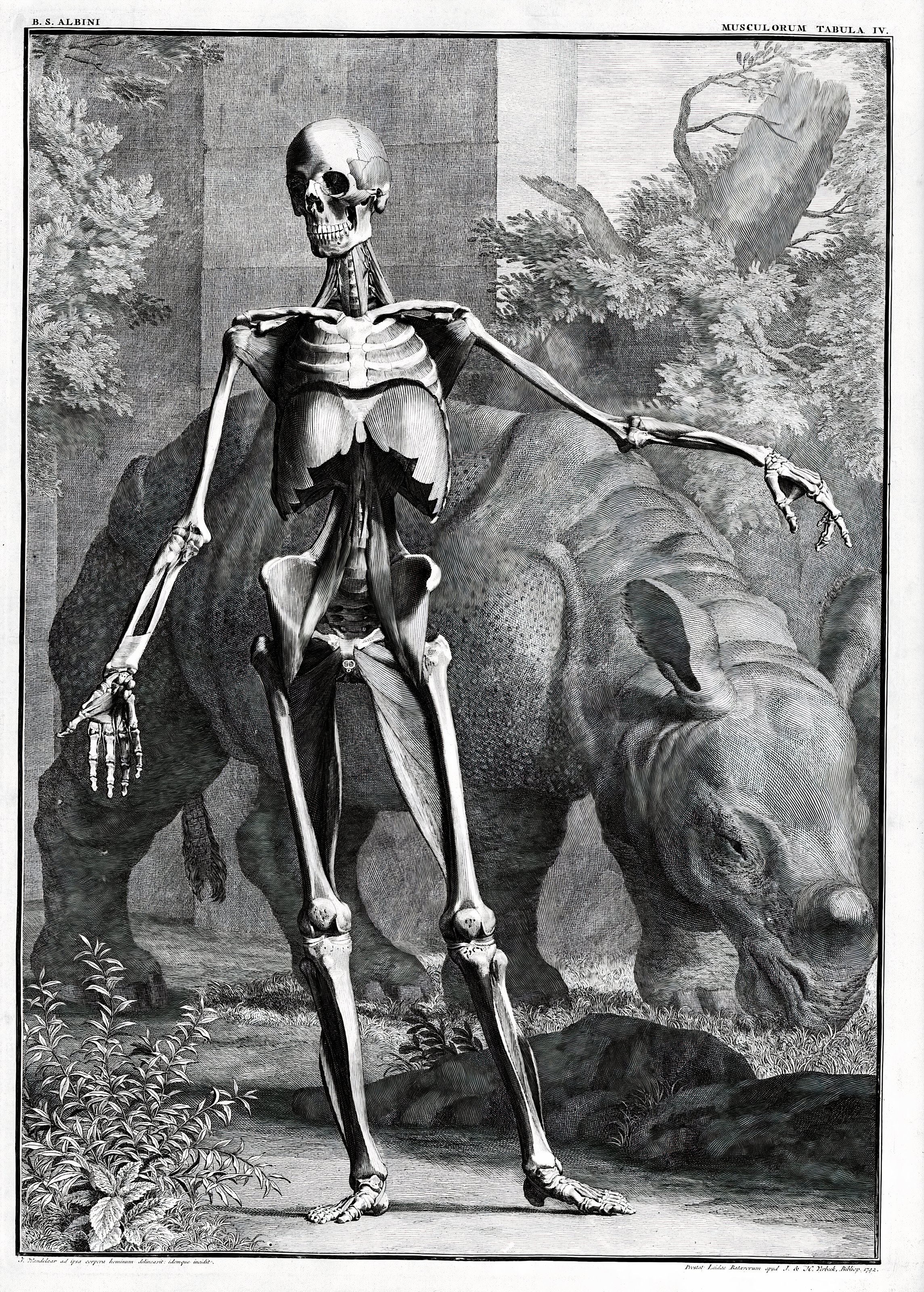
Printed large on matte art paper or gallery canvas, or box-framed under acrylic. Here, Bernhard Siegfried Albinus, engr. Jan Wandelaar’s plate of 1747 hung in four very different rooms.




De Humani Corporis Fabrica · 1543
The Fabrica
The founding masterworks. In 1543 Vesalius overturned fourteen centuries of error with a single book — and its figures, standing alive in an Italian landscape, changed art as much as science.
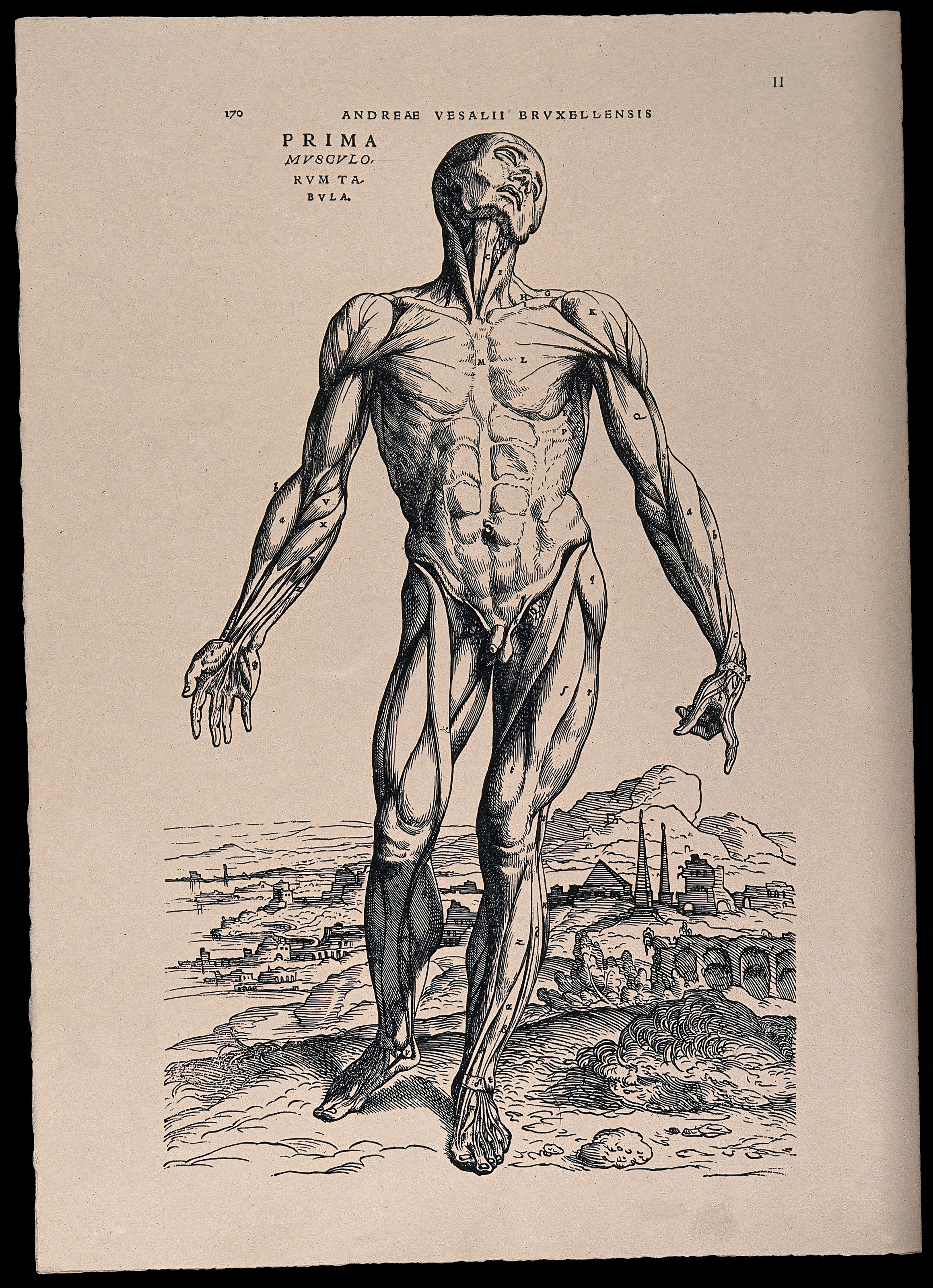
Andreas Vesalius · 1543
The Muscle Man
The image that founded modern anatomy.
De Humani Corporis Fabrica · 1543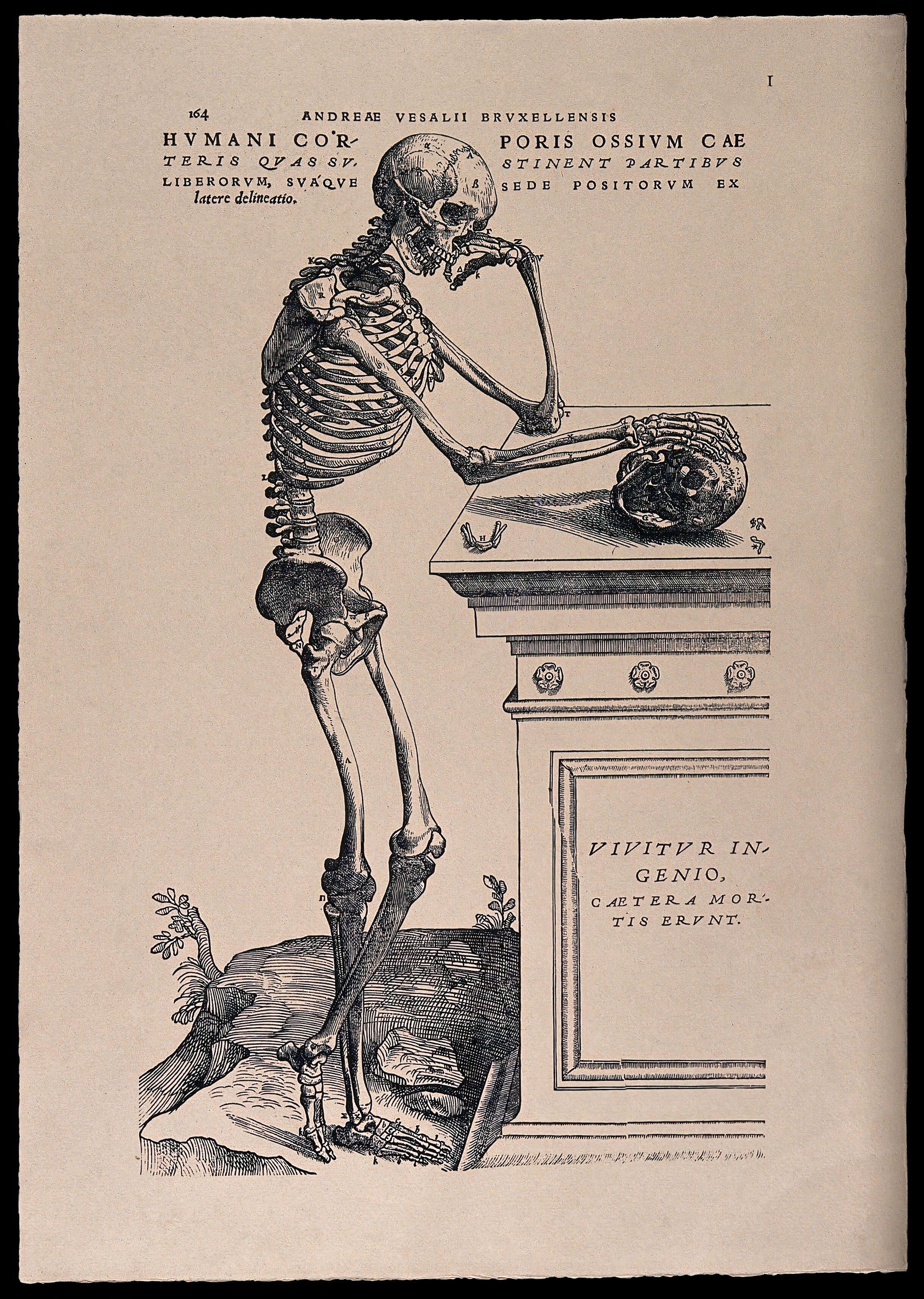
Andreas Vesalius · 1543
The Contemplating Skeleton
A skeleton, lost in thought before a tomb.
Vivitur ingenio, caetera mortis erunt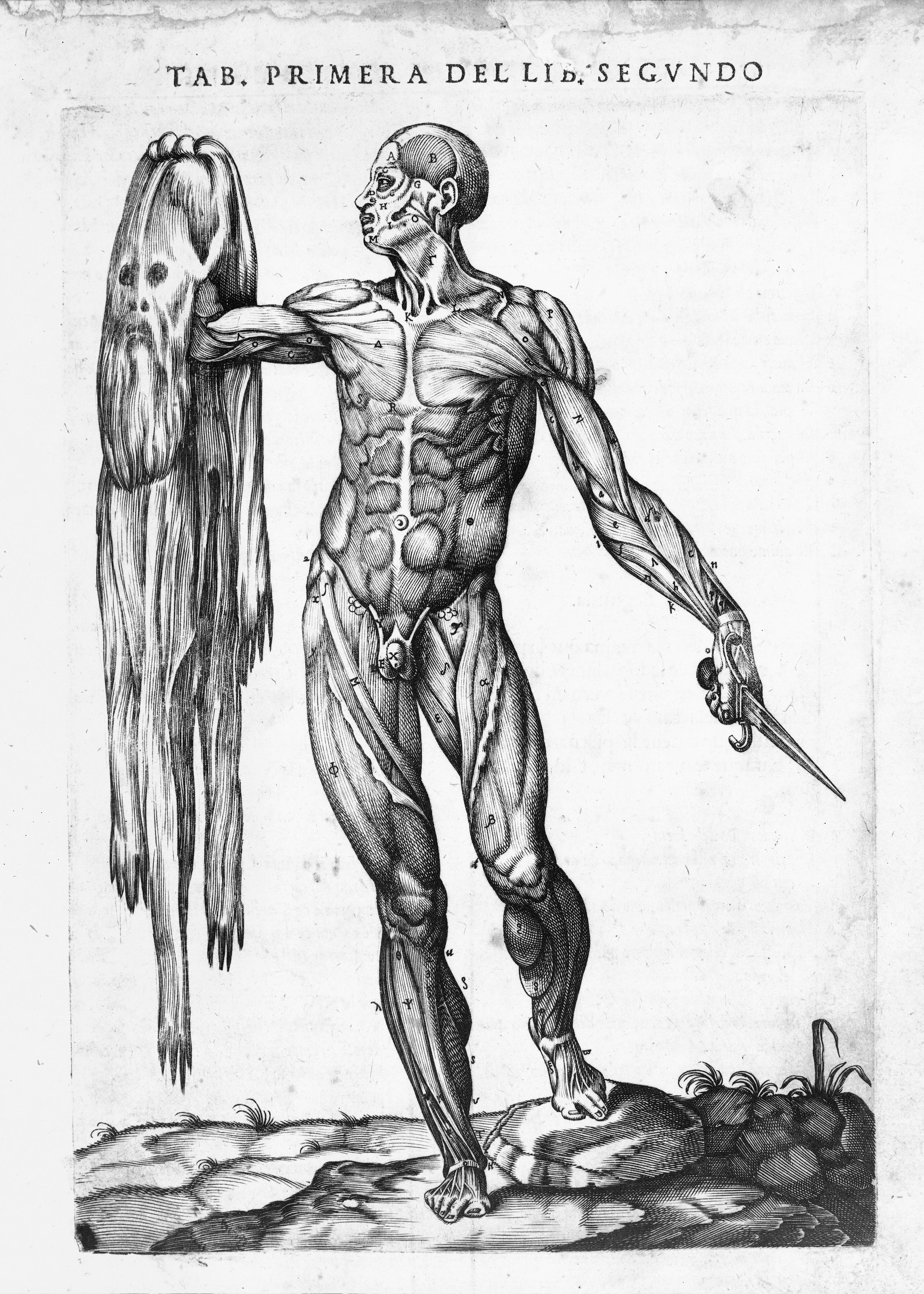
Juan Valverde de Amusco · 1556
The Man Who Holds His Own Skin
A figure carrying his own flayed hide.
Historia de la Composición del Cuerpo Humano · 1556Tabulae Sceleti et Musculorum · 1747
The Ideal Figure
The Enlightenment asked for the perfect body, drawn perfectly. Albinus and Cheselden answered with figures posed like antique gods — and set them against rhinoceroses, ruins, and poetry.
Bernhard Siegfried Albinus, engr. Jan Wandelaar · 1747
The Skeleton and the Rhinoceros
An anatomy plate with a rhinoceros in the background.
Tabulae Sceleti et Musculorum · 1747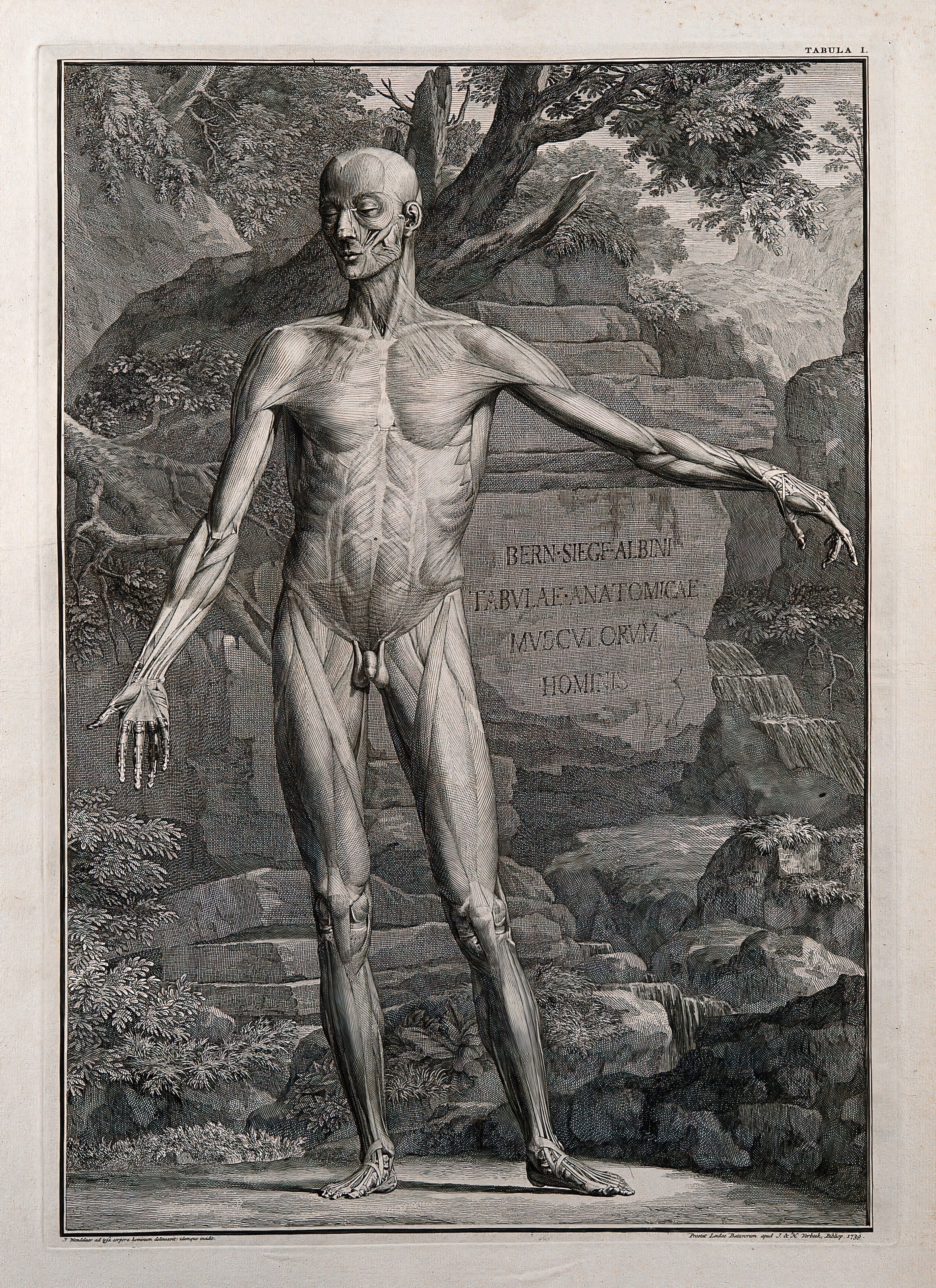
Bernhard Siegfried Albinus, engr. Jan Wandelaar · 1747
The Ideal Figure
Human anatomy as classical sculpture.
Tabulae Sceleti et Musculorum · 1747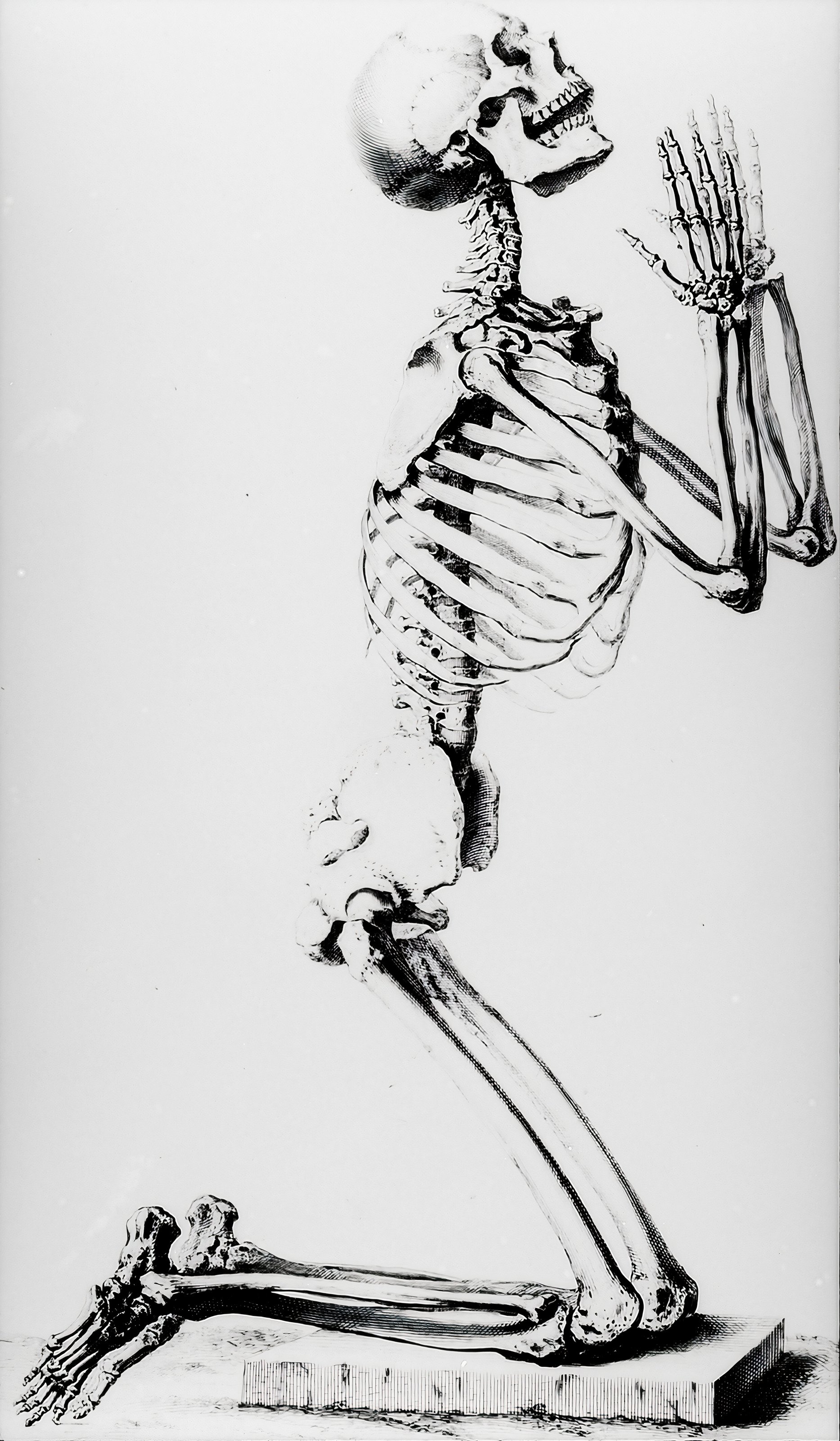
William Cheselden · 1733
A Skeleton, from the Osteographia
Bones drawn with the aid of the camera obscura.
Osteographia · 1733Myologie Complette en Couleur · 1746
The Anatomical Angel
Gautier d'Agoty printed the body in full colour when no one else could — luminous mezzotints where dissection turns, unnervingly, into the sublime.
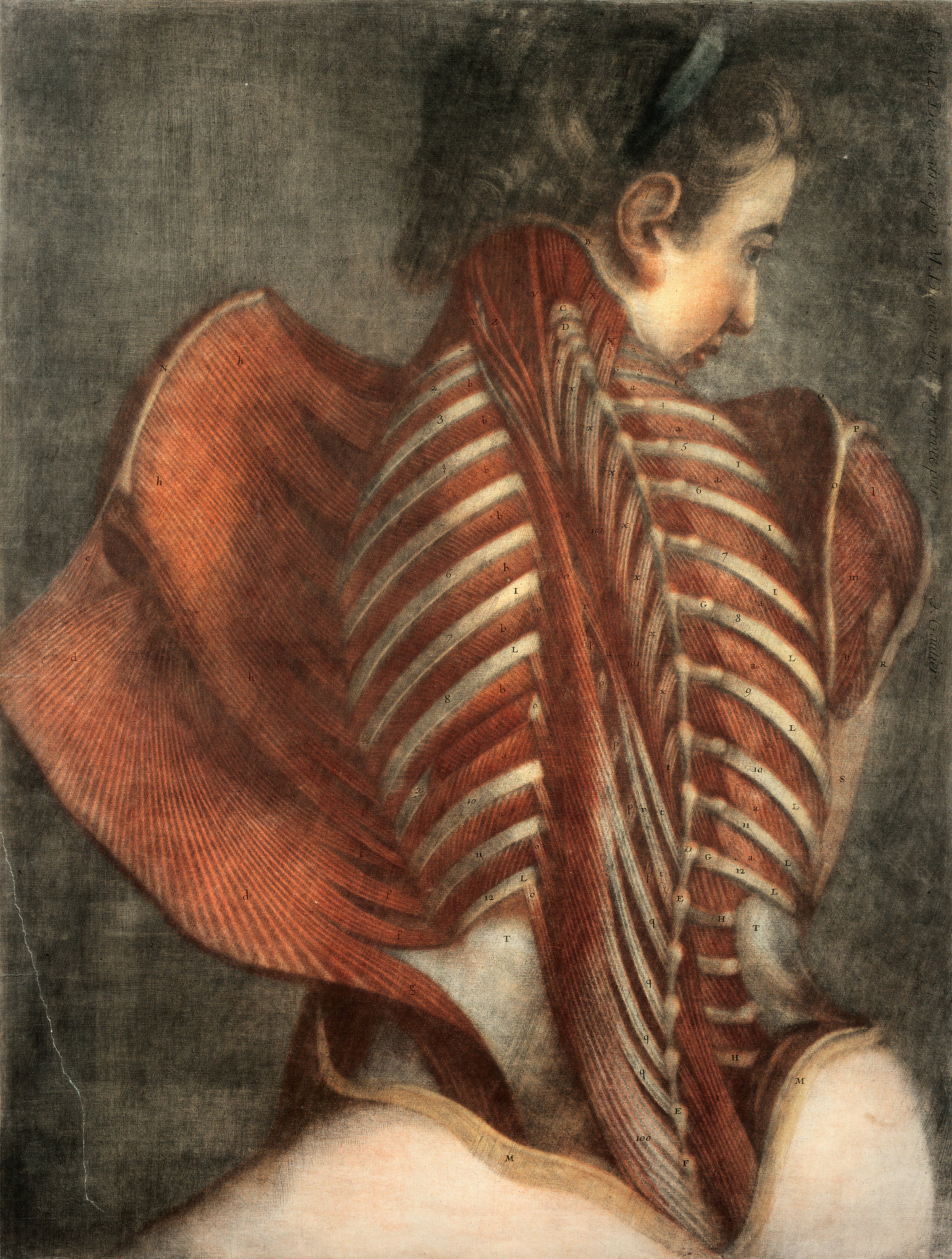
Jacques-Fabien Gautier d’Agoty · 1746
The Anatomical Angel
A dissection that looks like a winged figure.
L’Ange Anatomique · 1746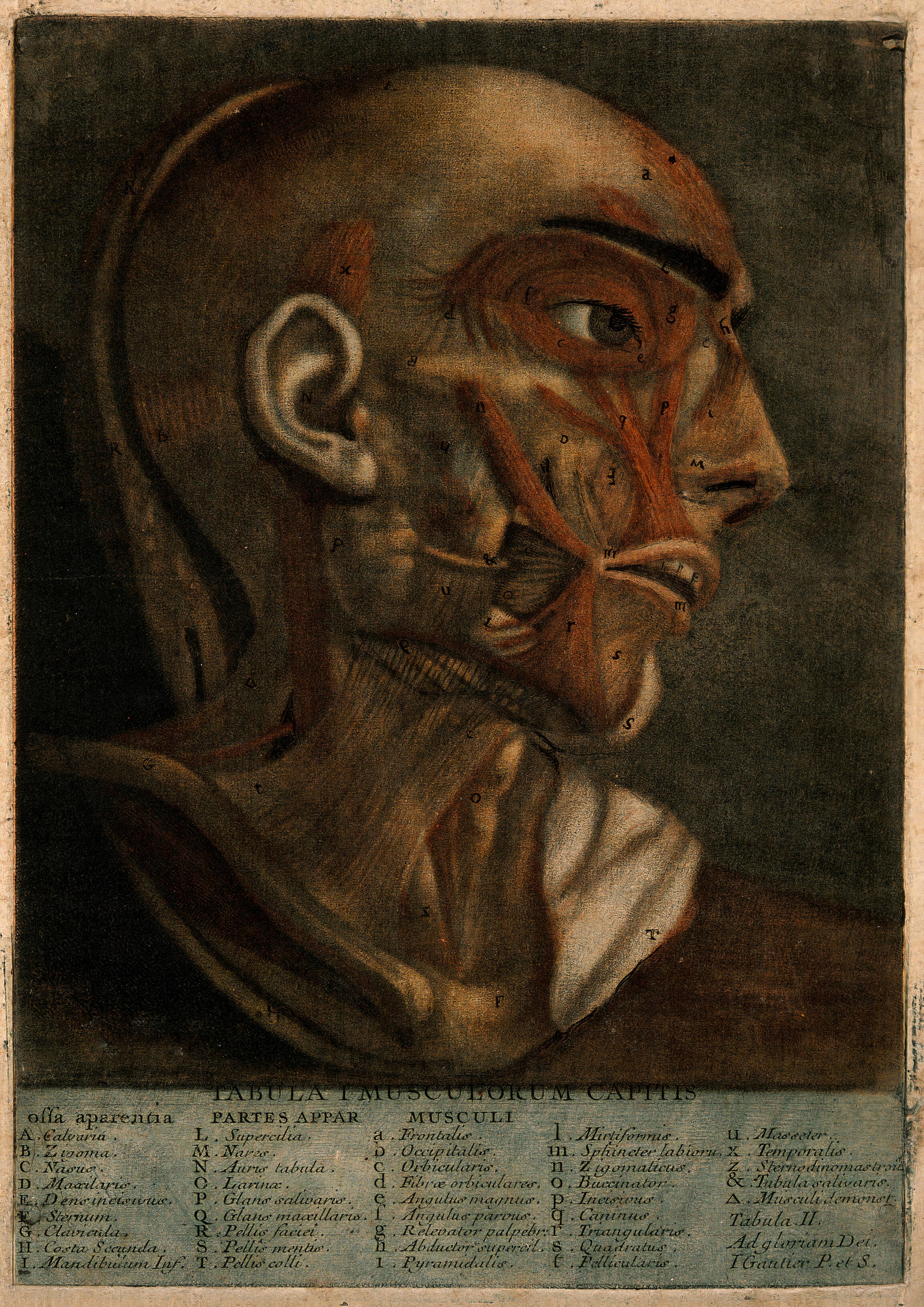
Jacques-Fabien Gautier d’Agoty · 1748
Anatomy of the Head
The dissected head, in luminous colour.
Anatomie de la Tête · 1748Vivitur ingenio, caetera mortis erunt
Memento Mori
The poetic skeletons. Where the anatomists became stage-directors — a dance of death, a still life grown from the body itself, science as a meditation on mortality.
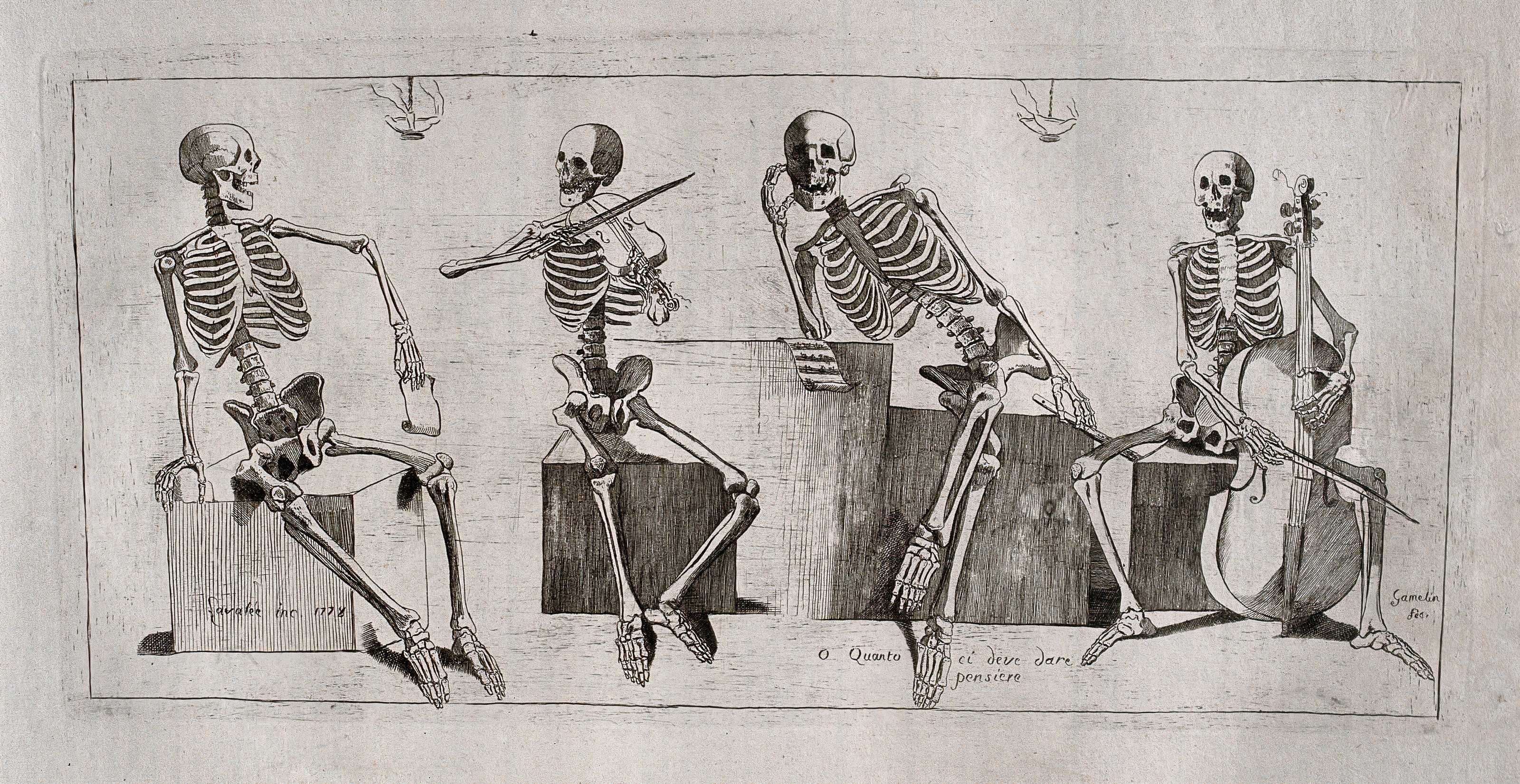
Jacques Gamelin · 1779
The Dance of Death
Skeletons in restless, theatrical motion.
Nouveau Recueil d’Ostéologie et de Myologie · 1779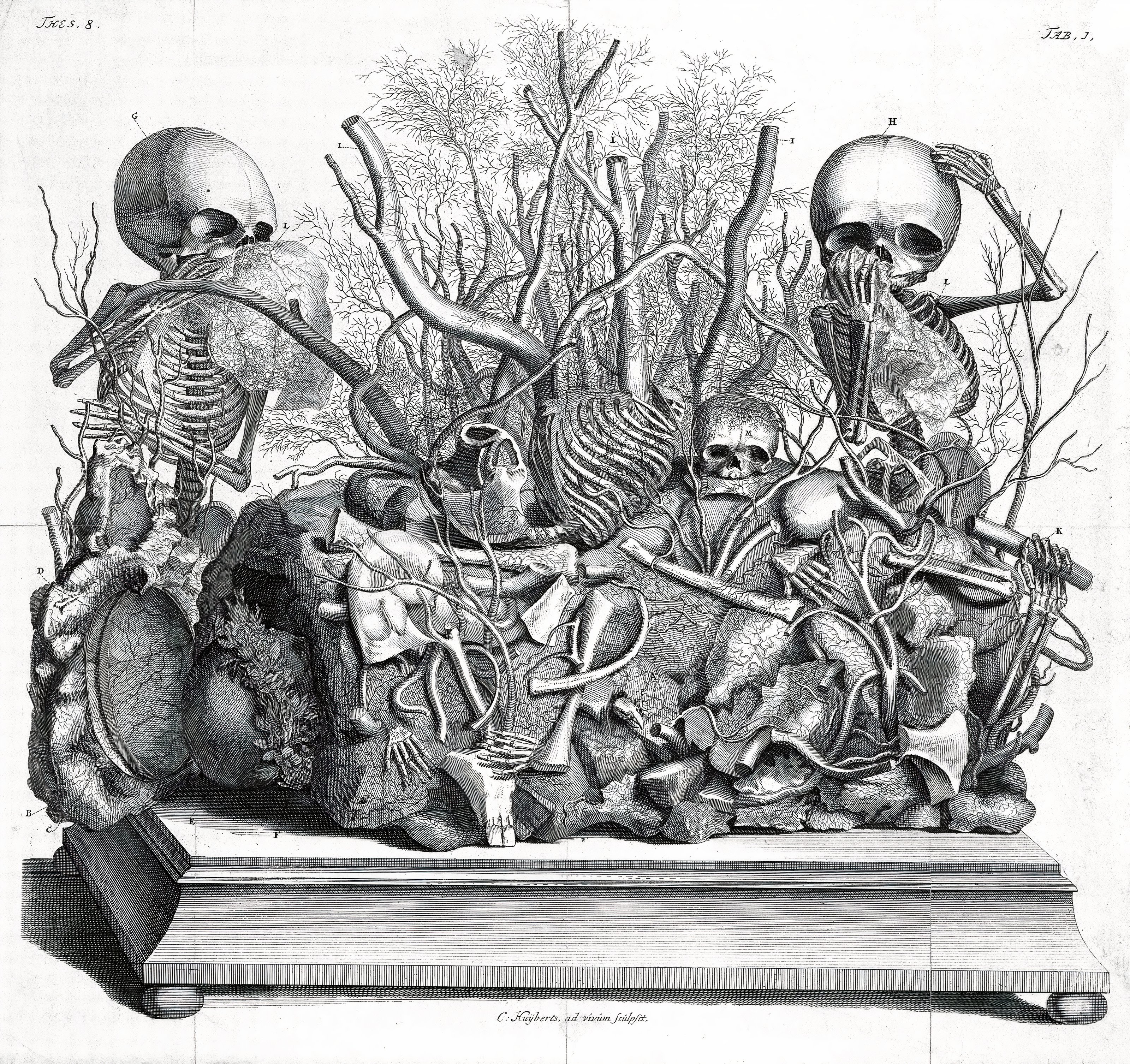
after Frederik Ruysch · early 18th c.
An Anatomical Tableau
A still life built from the body itself.
Thesaurus AnatomicusTraité Complet de l'Anatomie de l'Homme · 1831–1854
The Great Atlases
The golden age of the plate. Bourgery, Mascagni, Eustachi, Hunter — hundreds of lithographs and engravings in which scientific precision and sheer beauty reached their height together.
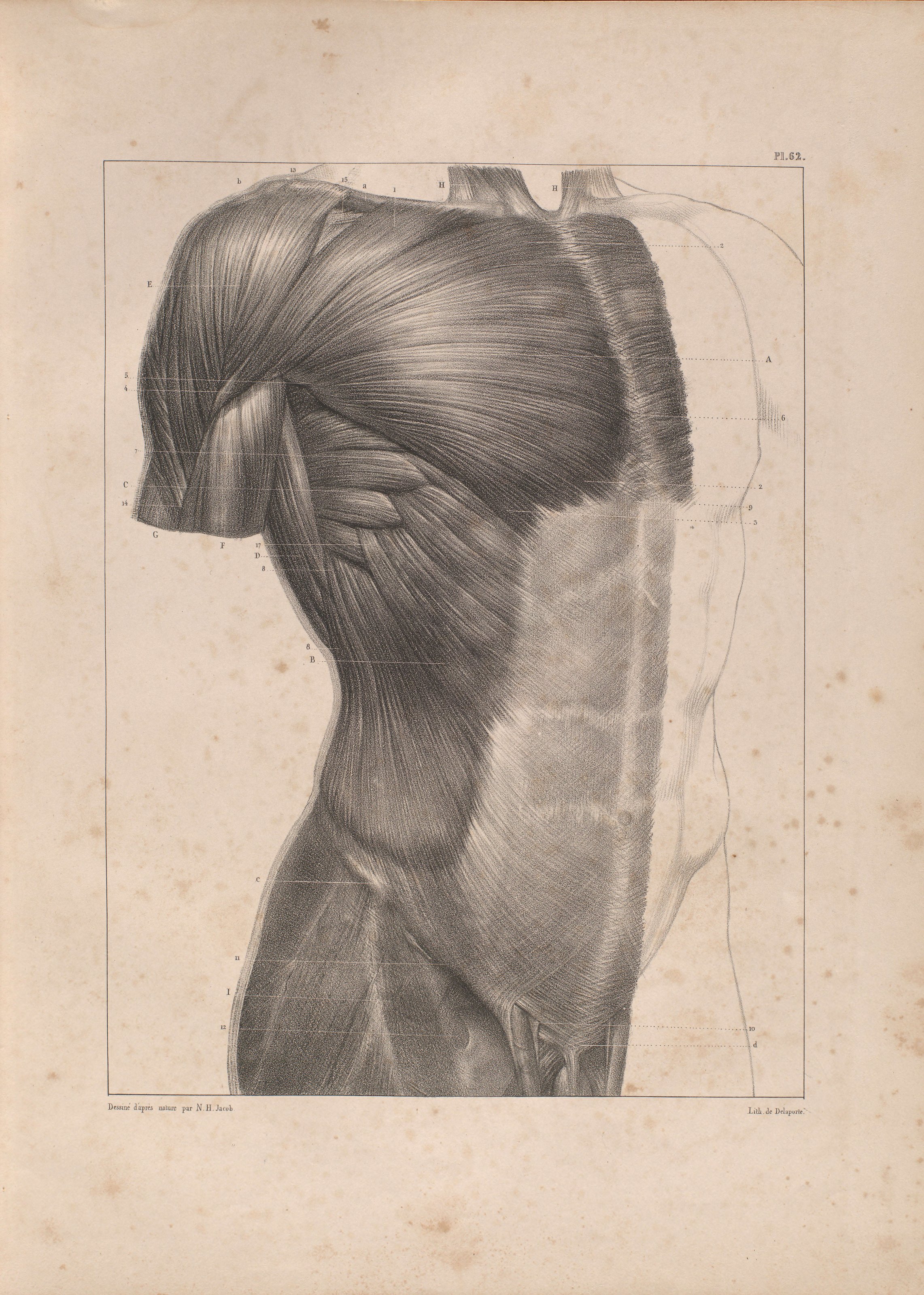
J.-B. M. Bourgery & N. H. Jacob · 1831–1854
A Bourgery Plate
The most beautiful anatomy of the 19th century.
Traité Complet de l’Anatomie de l’Homme · 1831–1854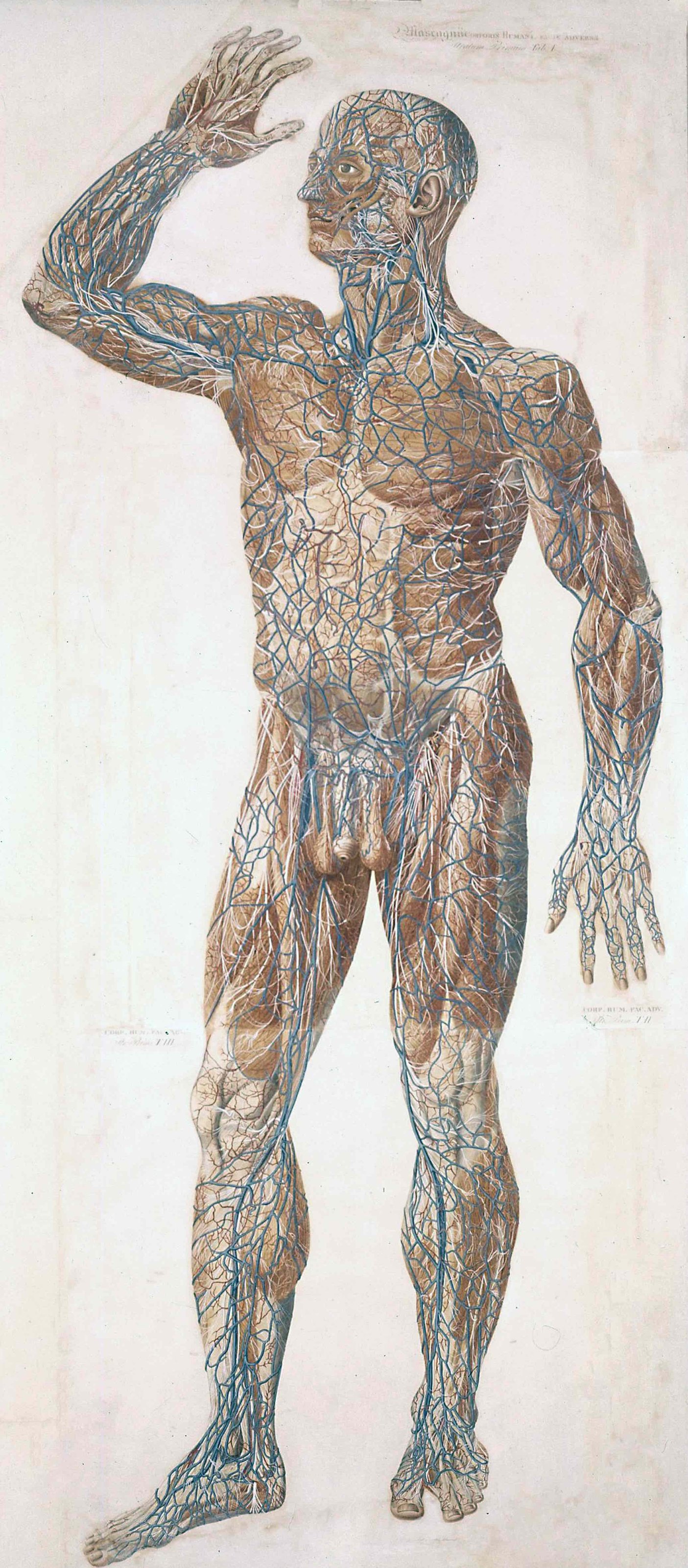
Paolo Mascagni · 1823–1831
The Body at Life Size
Anatomy on the grandest scale ever attempted.
Anatomia Universa · 1823–1831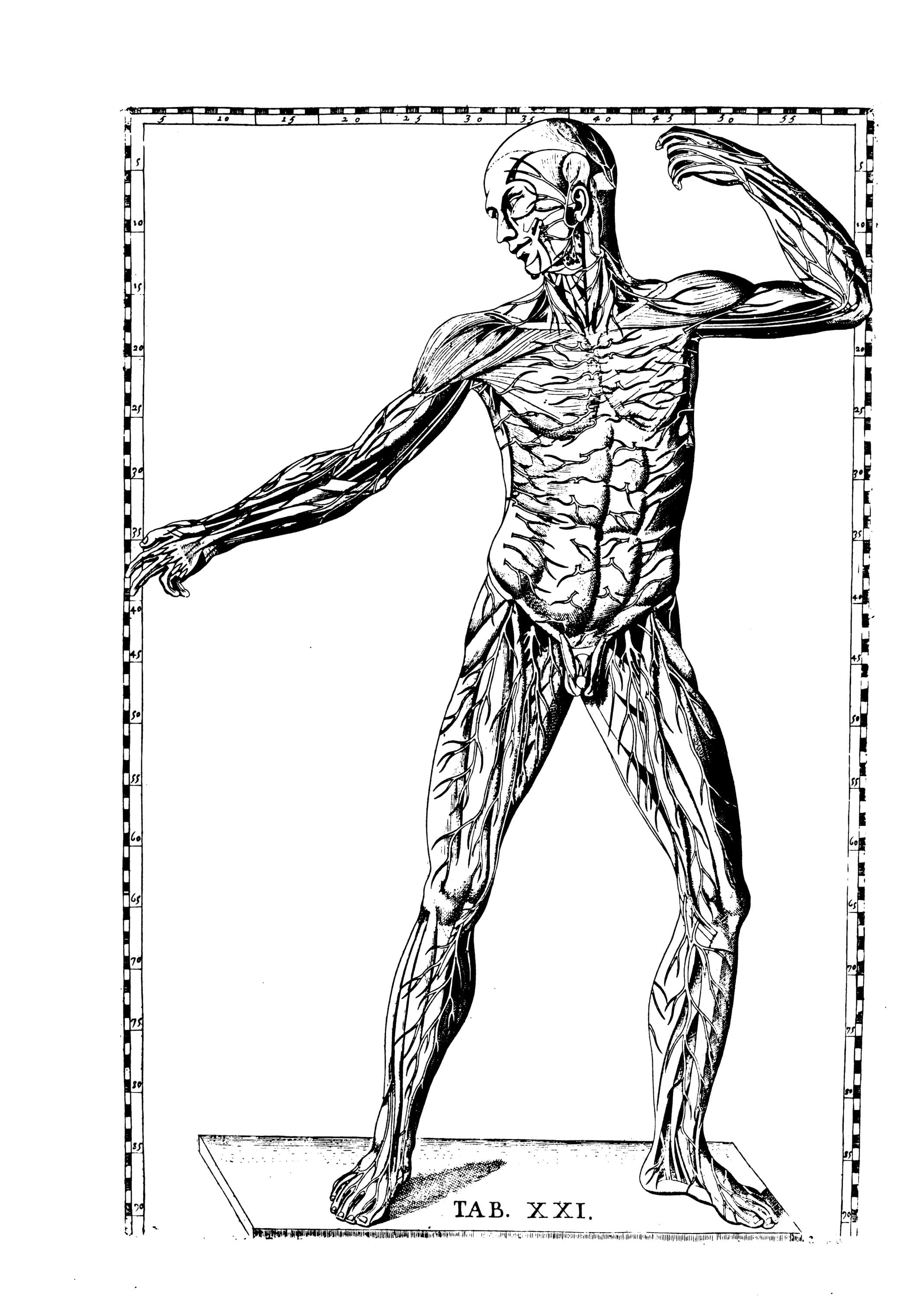
Bartolomeo Eustachi · engraved 1552, published 1714
The Eustachian Plates
Anatomy two centuries ahead of its time.
Tabulae Anatomicae · 1714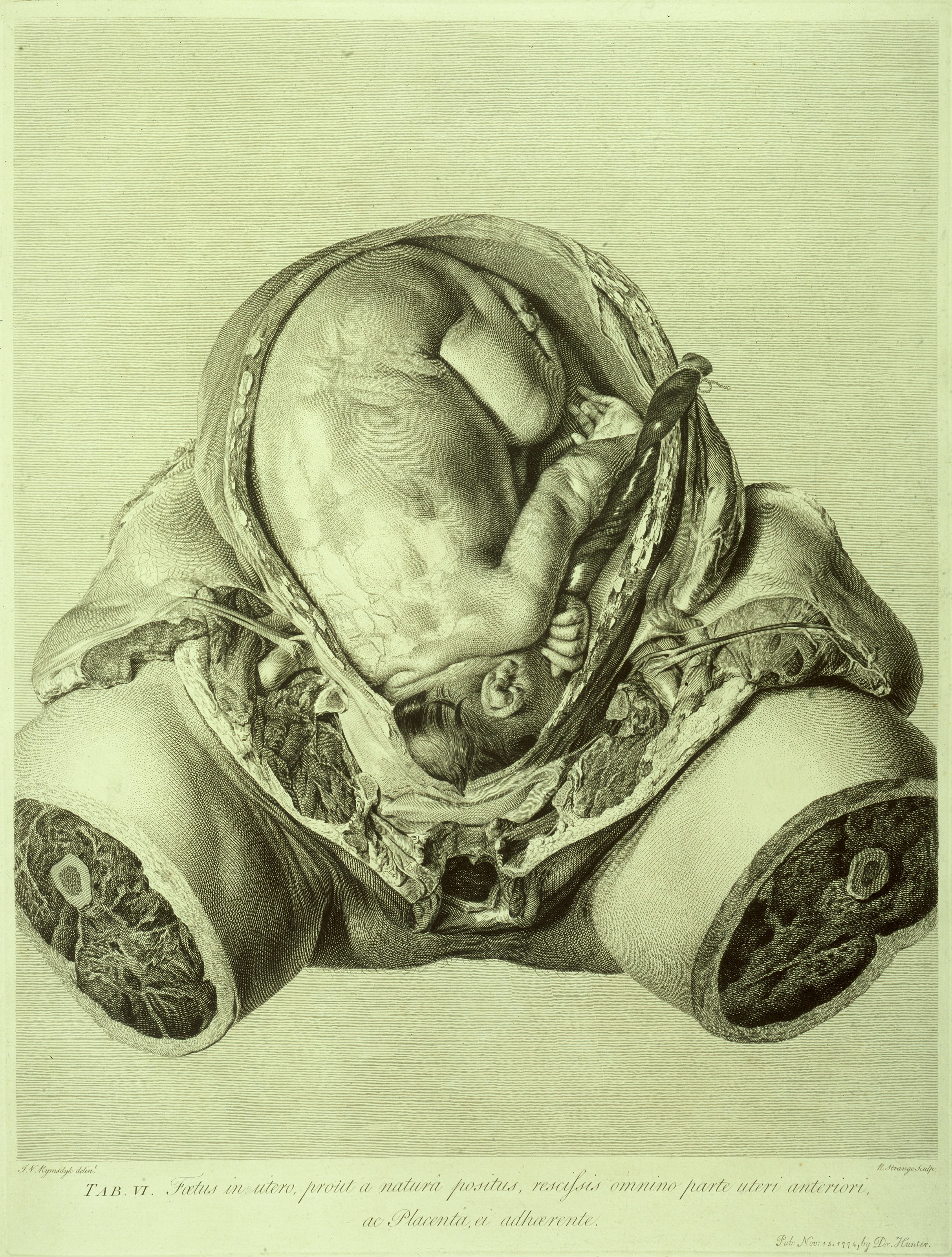
William Hunter, drawn by Jan van Rymsdyk · 1774
The Gravid Uterus
A monumental, unflinching study of new life.
Anatomia Uteri Humani Gravidi · 1774