A house of Provenance
The Anatomy Theatre
The masterworks of anatomy — as fine art, and the history of medicine.
Vivitur ingenio, caetera mortis erunt
Genius lives on; the rest belongs to death. — cut into the tomb in Vesalius’s plate, 1543
The house
The anatomists were artists, and their books are among the most beautiful ever printed.
For four centuries the study of the body was also a school of drawing. Vesalius set his figures alive in an Italian landscape; Albinus put a rhinoceros behind a skeleton; Gautier d’Agoty spent a brand-new colour process on a dissection. These plates were made to teach — and they became art on the way.
We reproduce them faithful to the source scan: no restoration, no interpretation, no edition of our own invention. Every work here is a masterwork of anatomical art, 16th to 19th century, centuries out of copyright, drawn from the collections that hold the originals. Printed large on matte art paper, canvas, or box-framed under acrylic — for the consulting room, the study, and the wall of anyone who finds the body astonishing.
De Humani Corporis Fabrica · 1543
The Fabrica
The founding masterworks. In 1543 Vesalius overturned fourteen centuries of error with a single book — and its figures, standing alive in an Italian landscape, changed art as much as science.
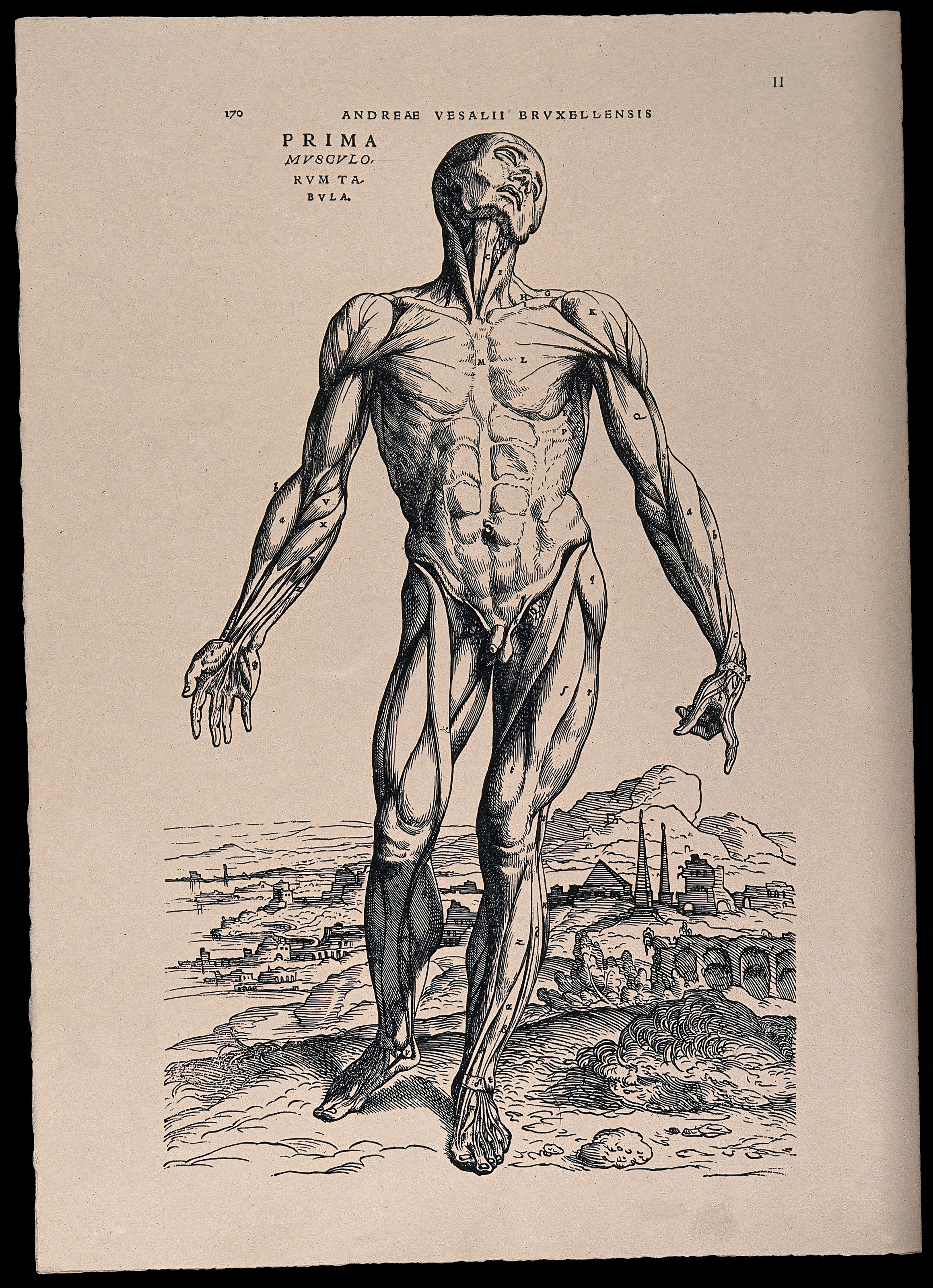
Andreas Vesalius · 1543
The Muscle Man
The image that founded modern anatomy.
De Humani Corporis Fabrica · 1543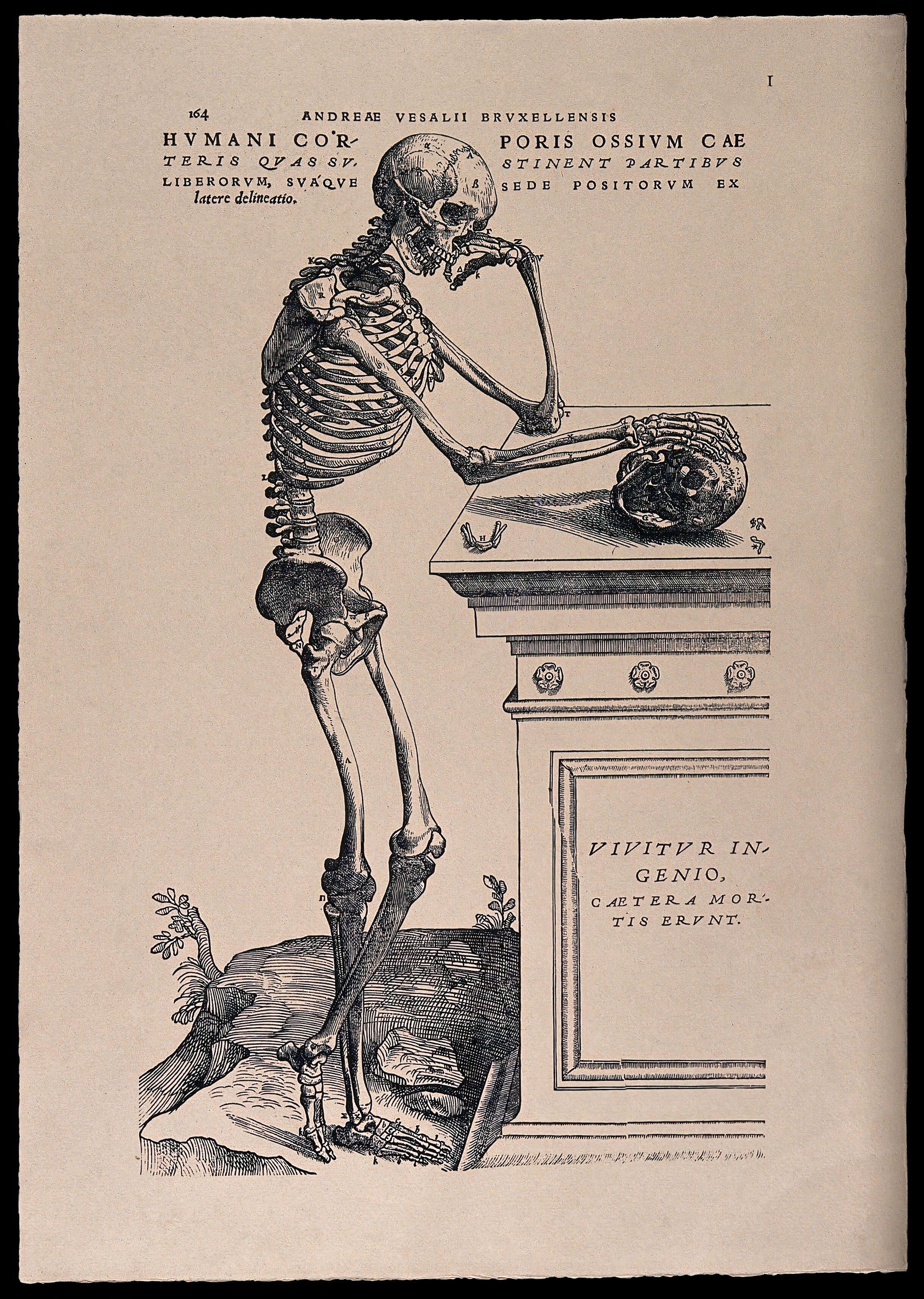
Andreas Vesalius · 1543
The Contemplating Skeleton
A skeleton, lost in thought before a tomb.
Vivitur ingenio, caetera mortis erunt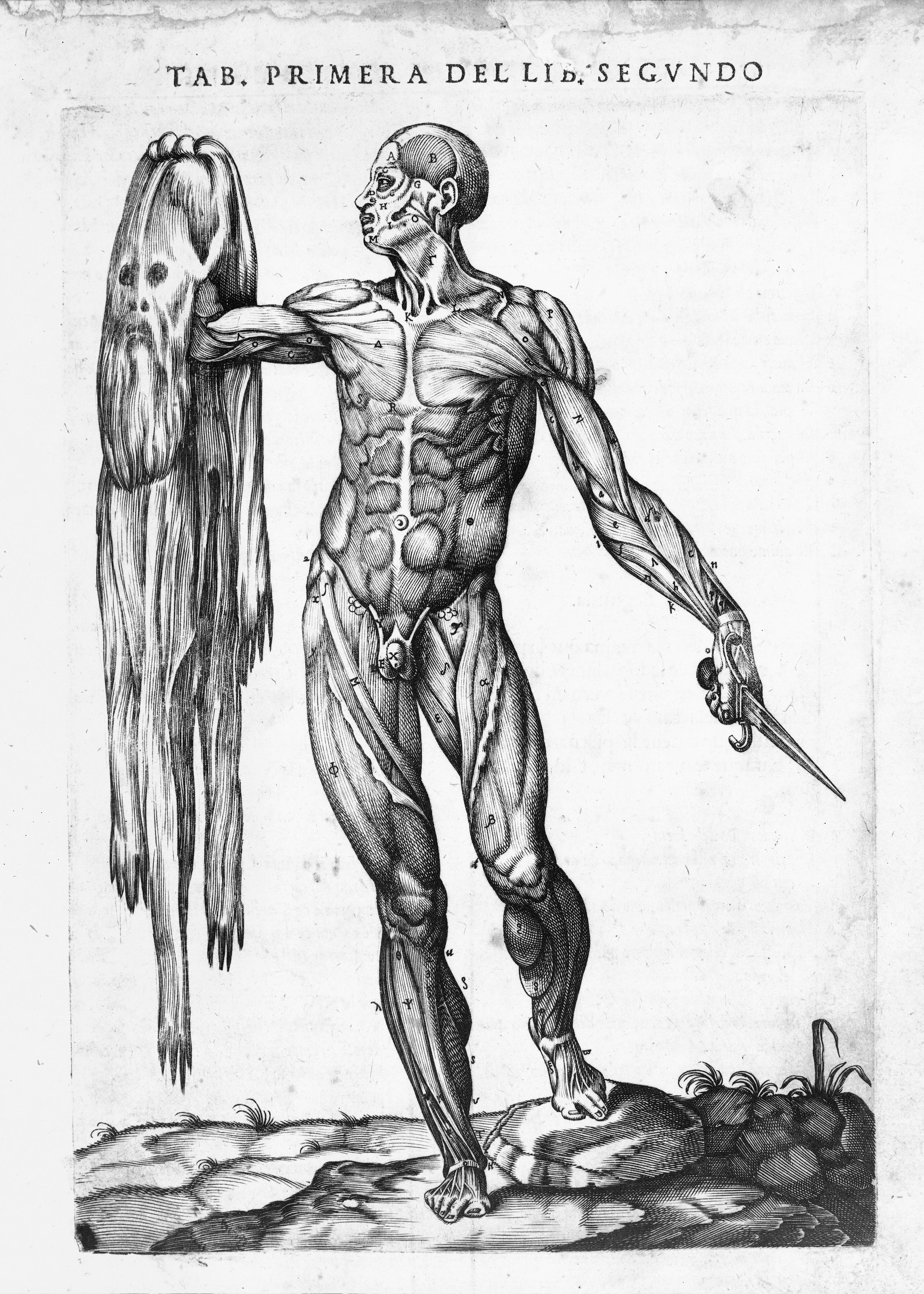
Juan Valverde de Amusco · 1556
The Man Who Holds His Own Skin
A figure carrying his own flayed hide.
Historia de la Composición del Cuerpo Humano · 1556Tabulae Sceleti et Musculorum · 1747
The Ideal Figure
The Enlightenment asked for the perfect body, drawn perfectly. Albinus and Cheselden answered with figures posed like antique gods — and set them against rhinoceroses, ruins, and poetry.
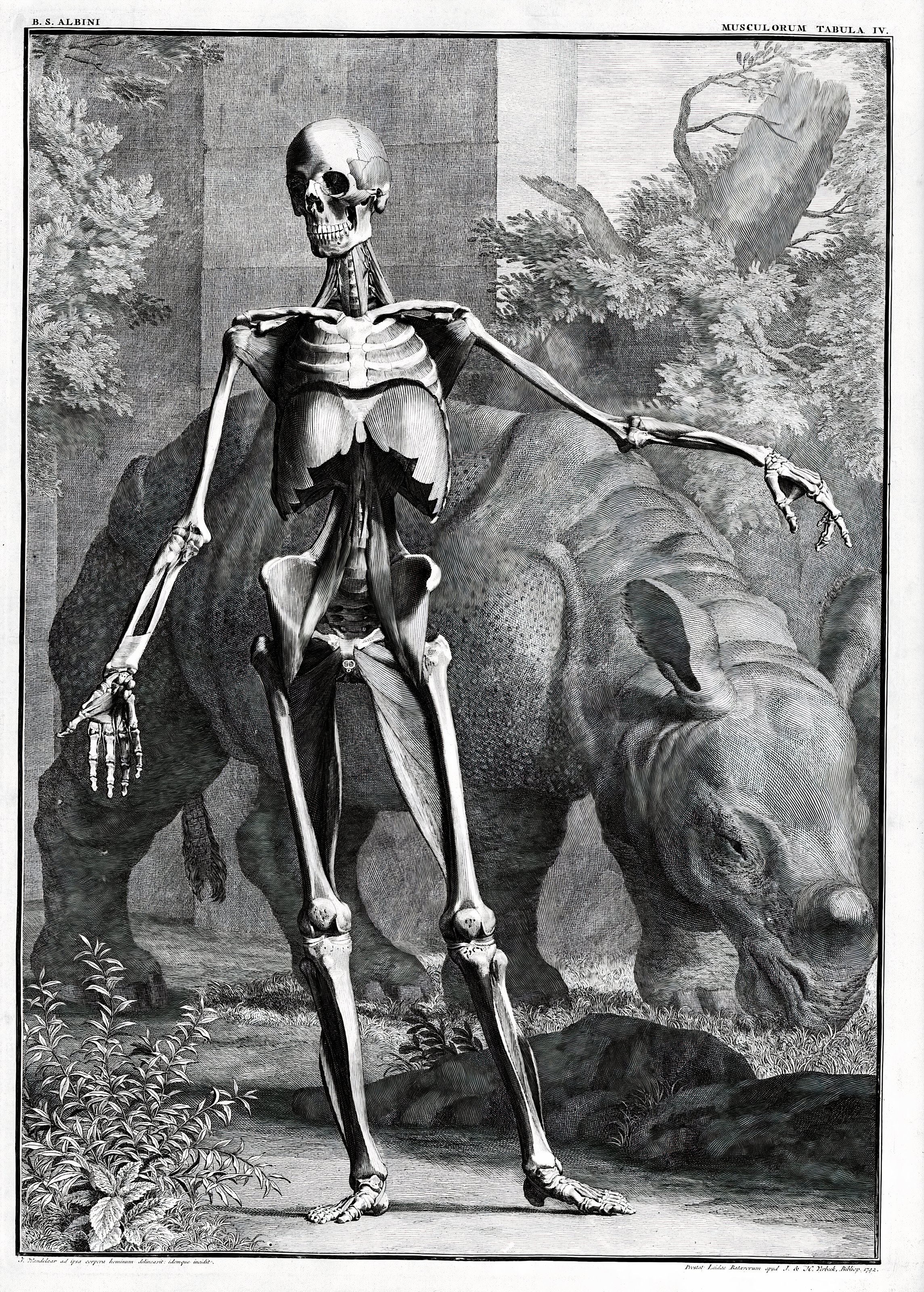
Bernhard Siegfried Albinus, engr. Jan Wandelaar · 1747
The Skeleton and the Rhinoceros
An anatomy plate with a rhinoceros in the background.
Tabulae Sceleti et Musculorum · 1747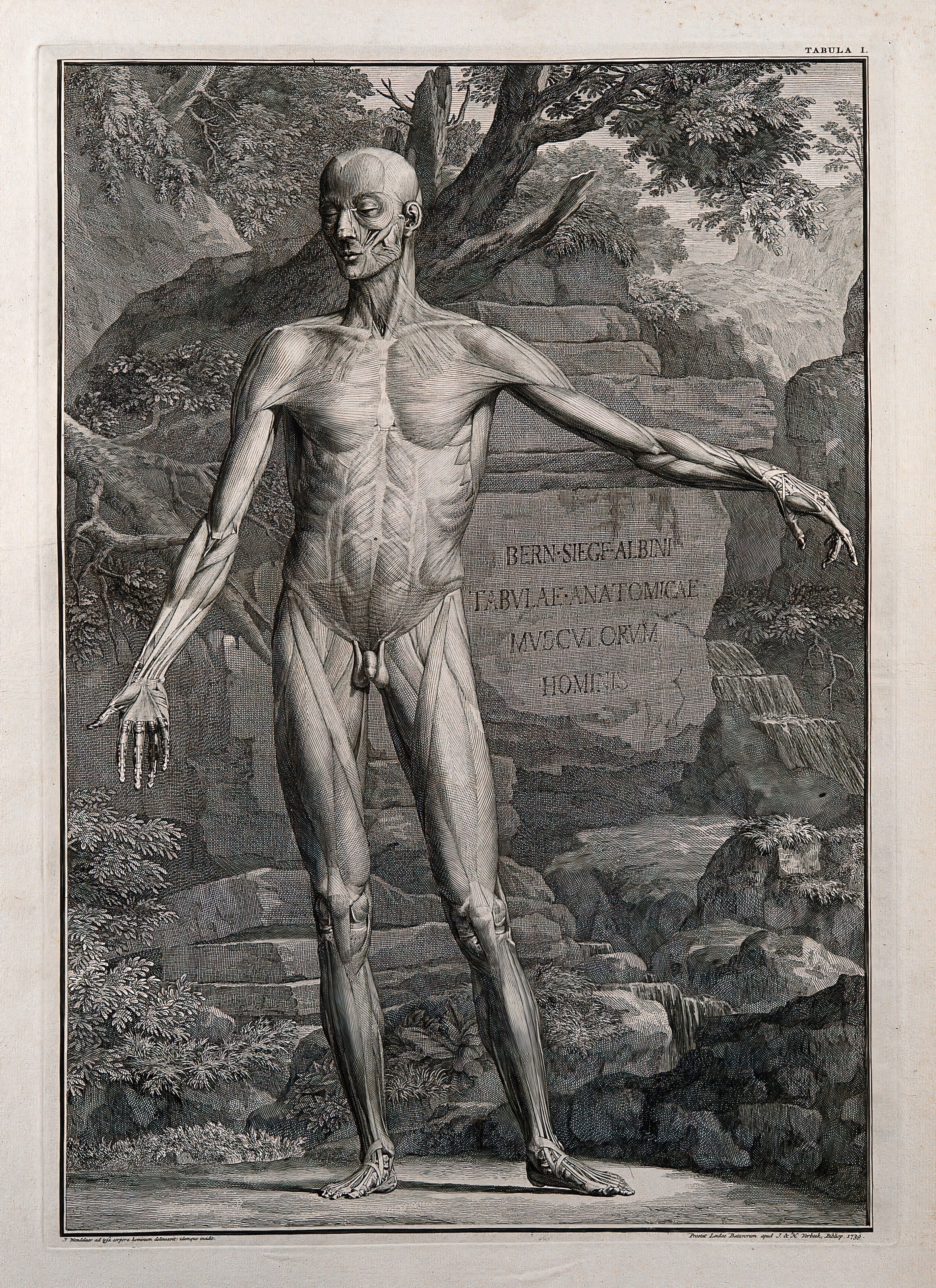
Bernhard Siegfried Albinus, engr. Jan Wandelaar · 1747
The Ideal Figure
Human anatomy as classical sculpture.
Tabulae Sceleti et Musculorum · 1747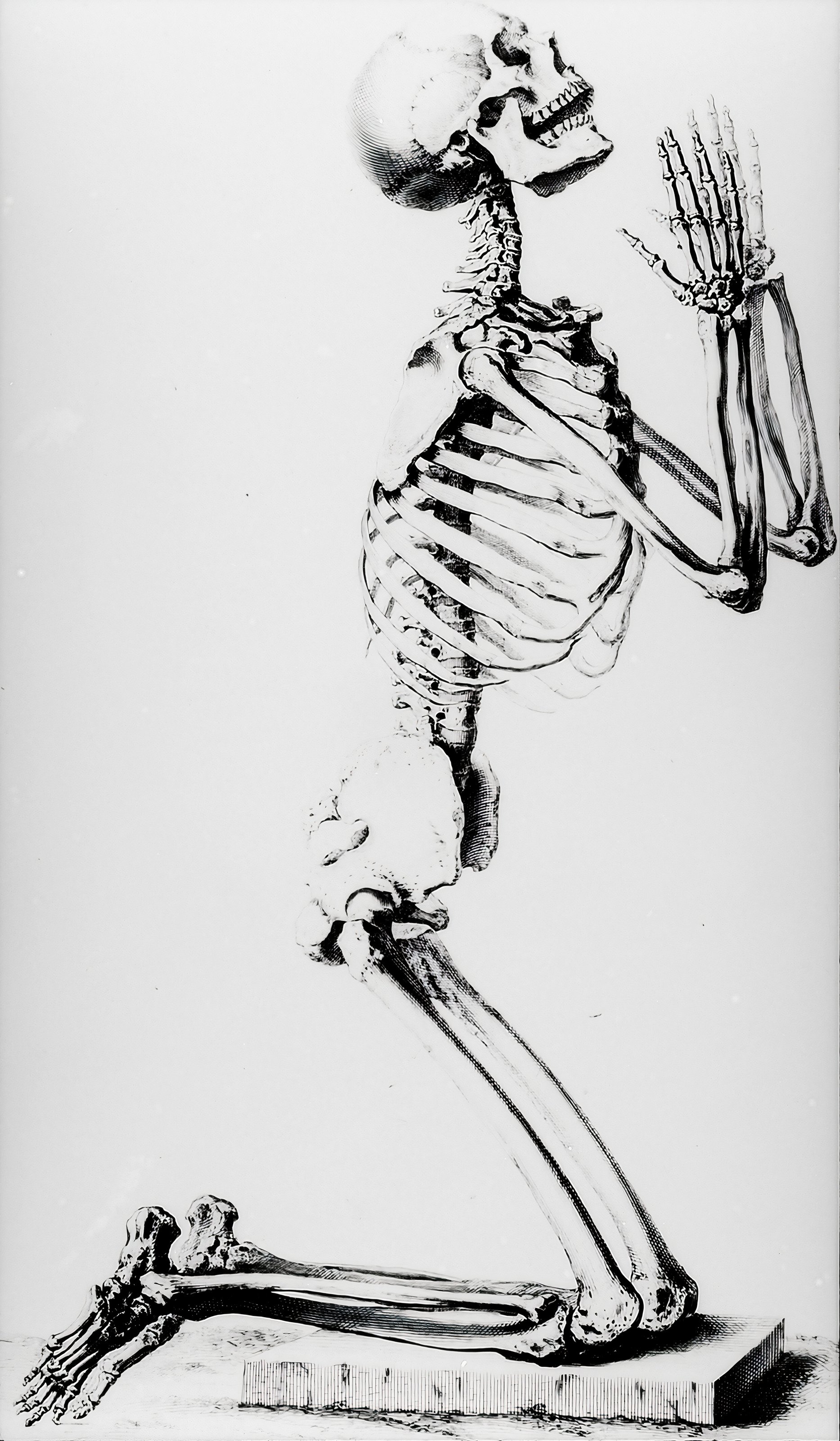
William Cheselden · 1733
A Skeleton, from the Osteographia
Bones drawn with the aid of the camera obscura.
Osteographia · 1733Myologie Complette en Couleur · 1746
The Anatomical Angel
Gautier d'Agoty printed the body in full colour when no one else could — luminous mezzotints where dissection turns, unnervingly, into the sublime.
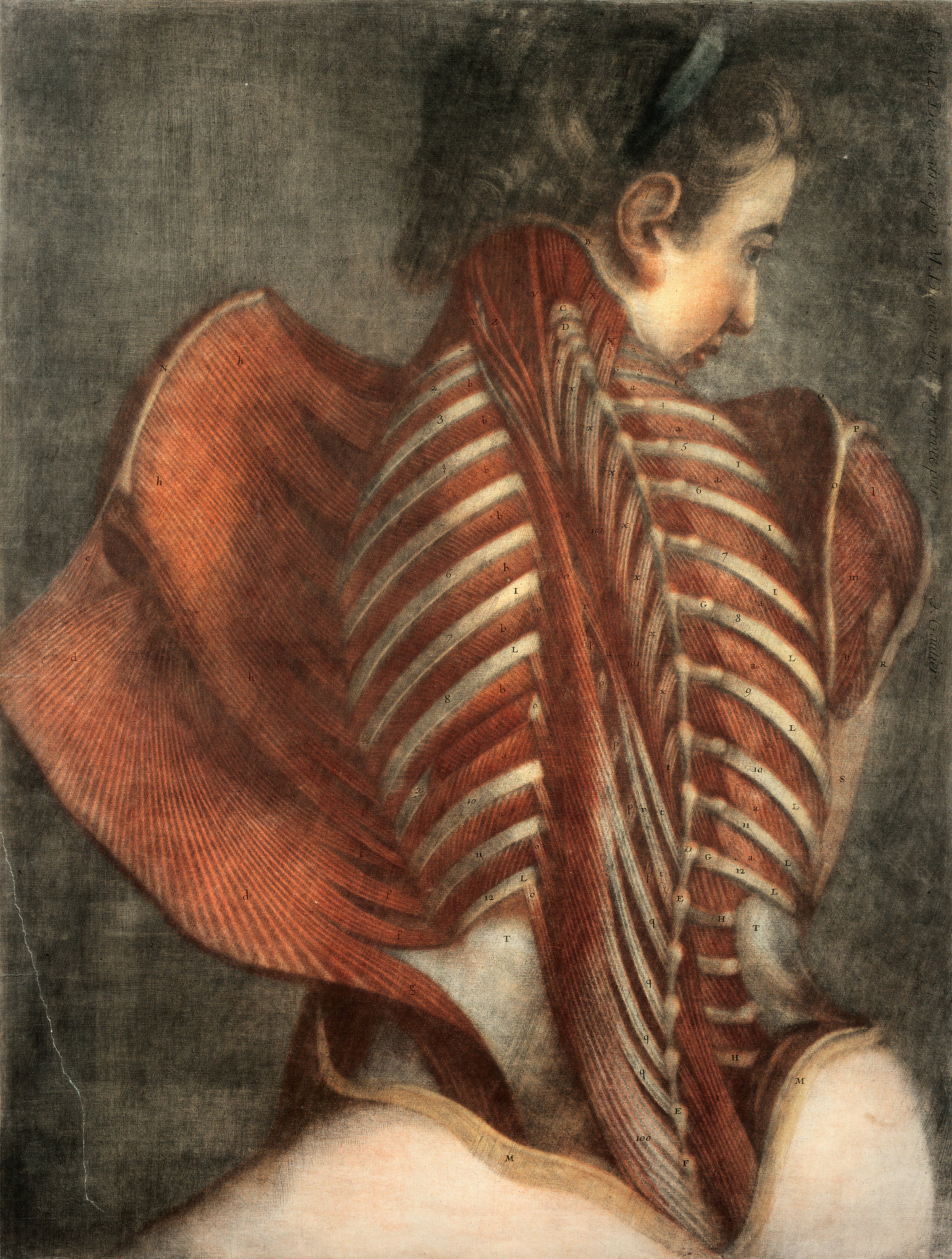
Jacques-Fabien Gautier d’Agoty · 1746
The Anatomical Angel
A dissection that looks like a winged figure.
L’Ange Anatomique · 1746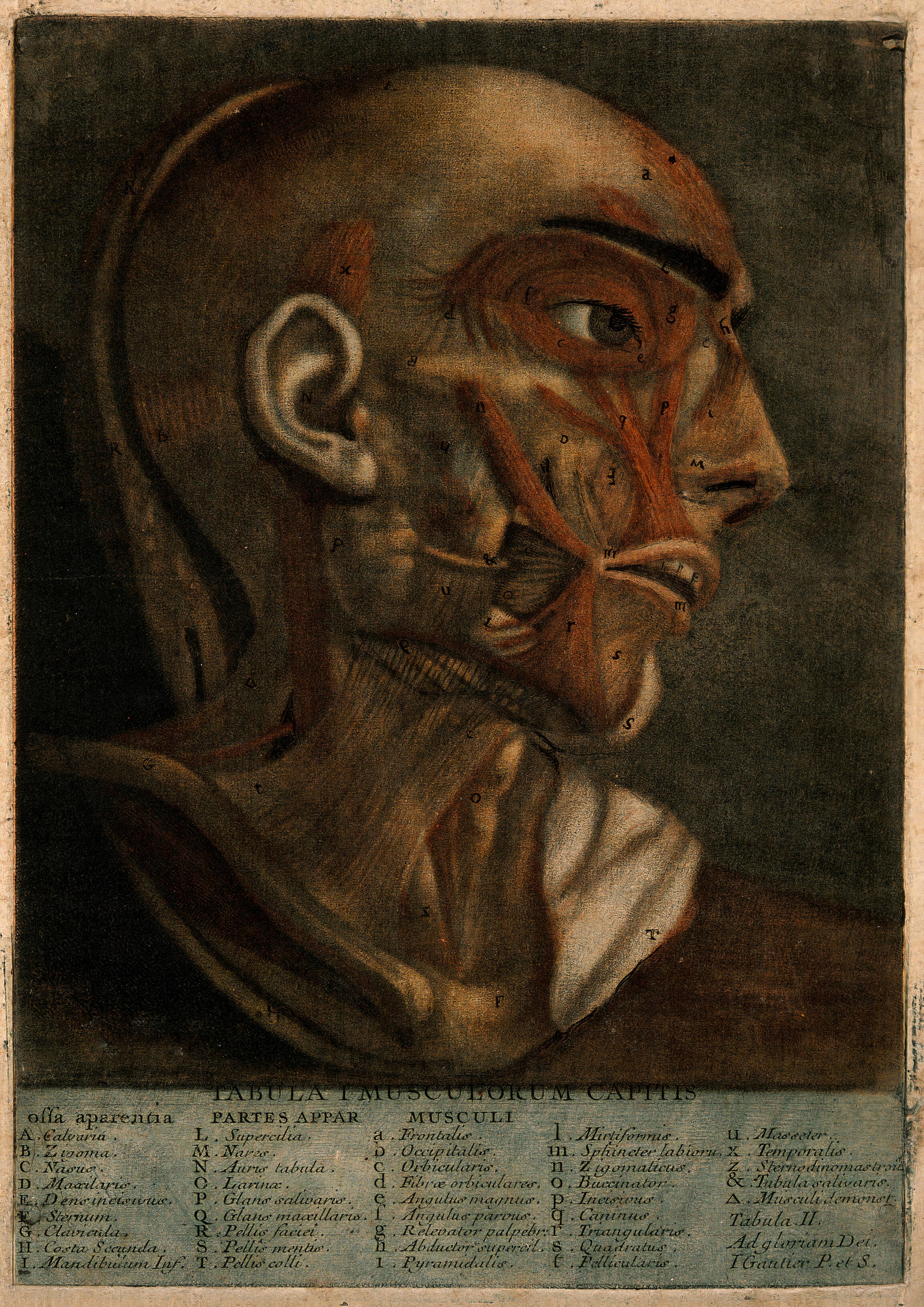
Jacques-Fabien Gautier d’Agoty · 1748
Anatomy of the Head
The dissected head, in luminous colour.
Anatomie de la Tête · 1748Vivitur ingenio, caetera mortis erunt
Memento Mori
The poetic skeletons. Where the anatomists became stage-directors — a dance of death, a still life grown from the body itself, science as a meditation on mortality.
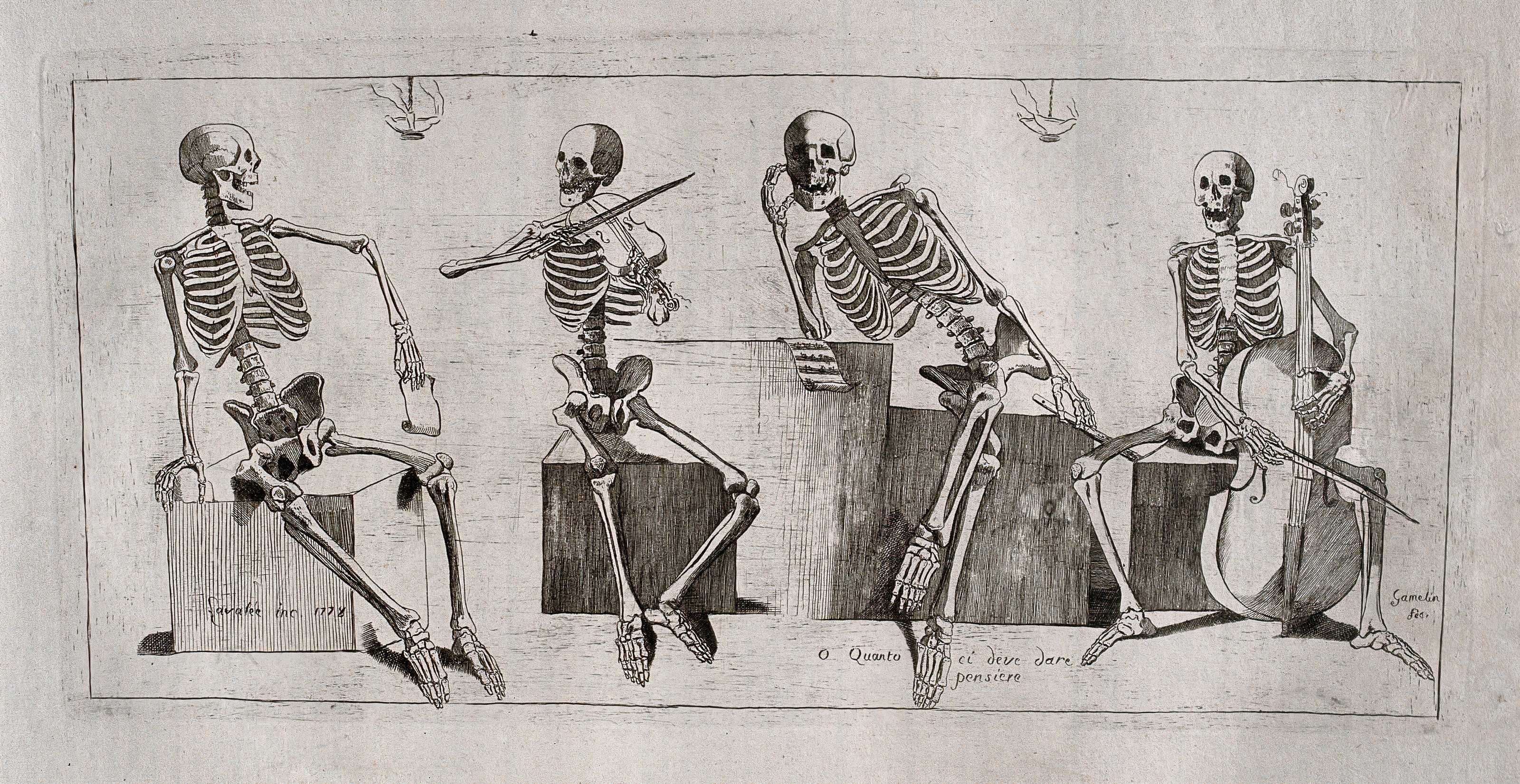
Jacques Gamelin · 1779
The Dance of Death
Skeletons in restless, theatrical motion.
Nouveau Recueil d’Ostéologie et de Myologie · 1779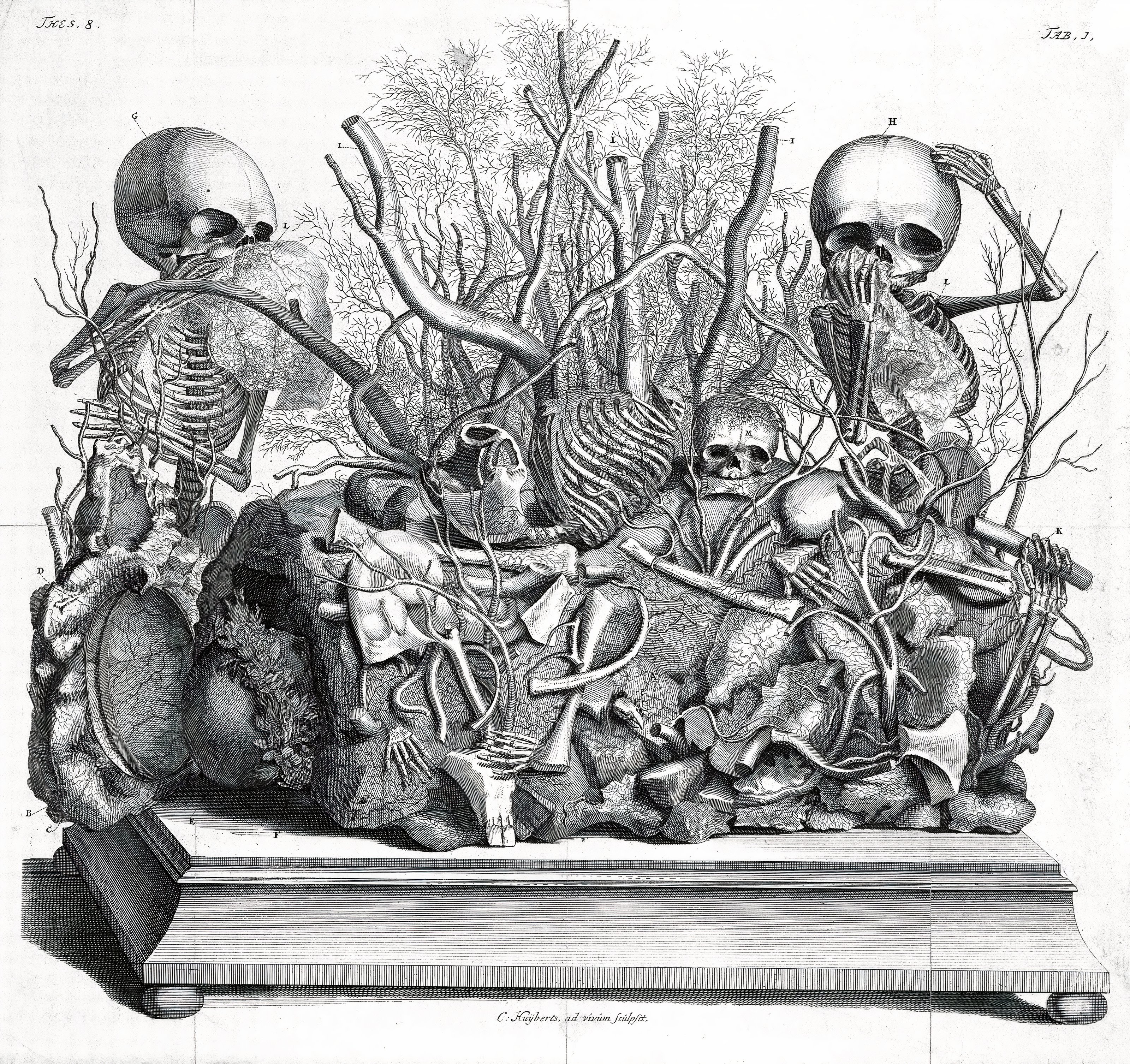
after Frederik Ruysch · early 18th c.
An Anatomical Tableau
A still life built from the body itself.
Thesaurus AnatomicusTraité Complet de l'Anatomie de l'Homme · 1831–1854
The Great Atlases
The golden age of the plate. Bourgery, Mascagni, Eustachi, Hunter — hundreds of lithographs and engravings in which scientific precision and sheer beauty reached their height together.
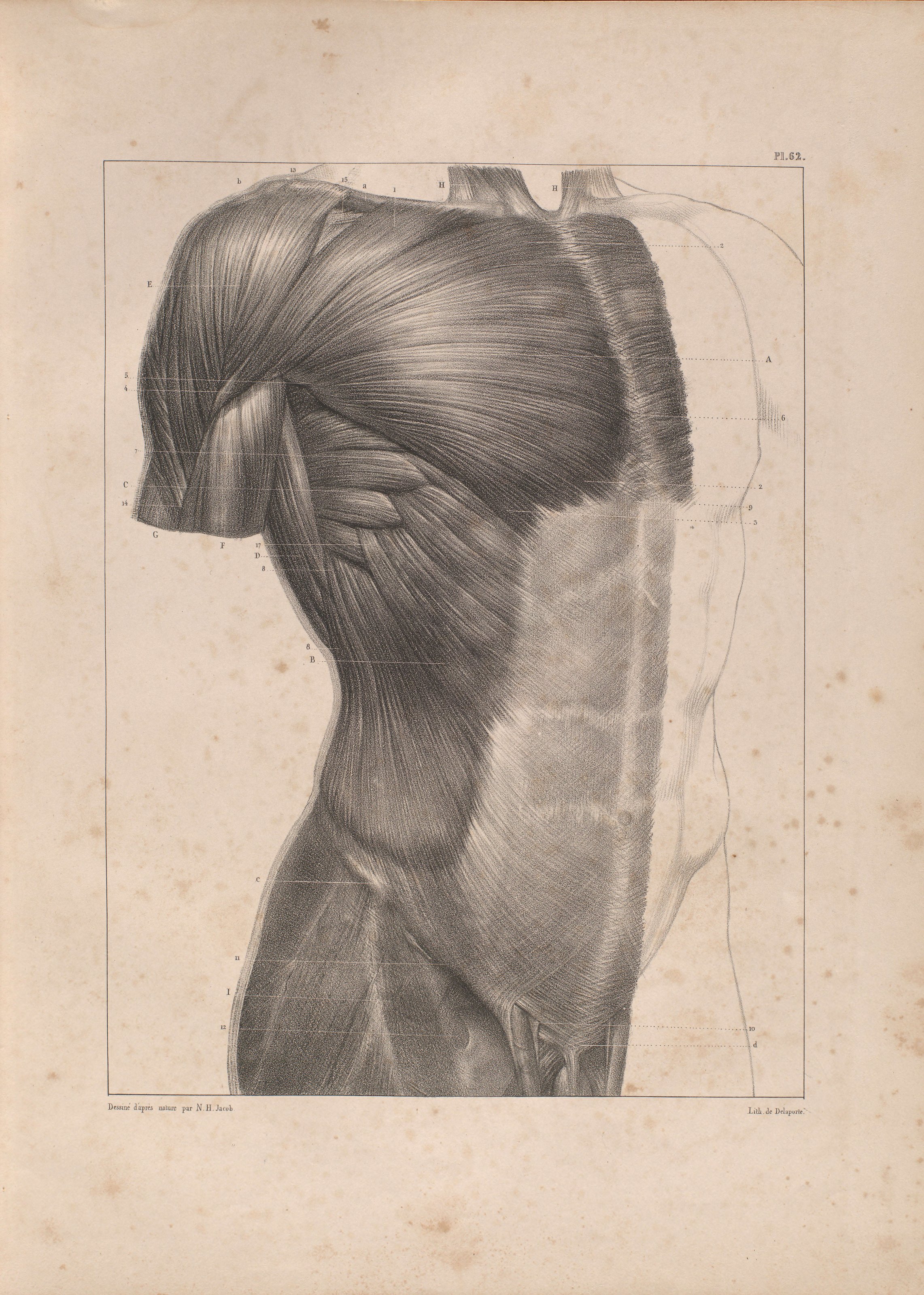
J.-B. M. Bourgery & N. H. Jacob · 1831–1854
A Bourgery Plate
The most beautiful anatomy of the 19th century.
Traité Complet de l’Anatomie de l’Homme · 1831–1854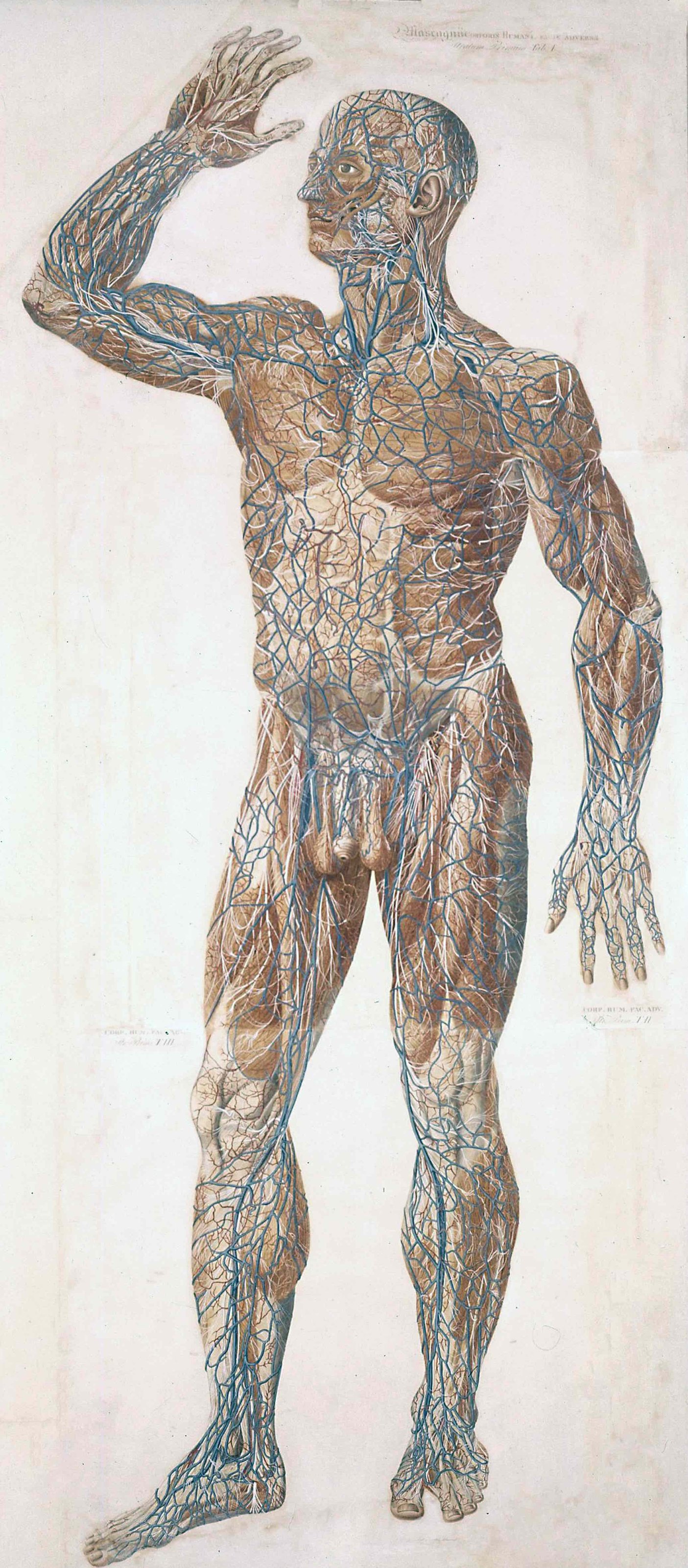
Paolo Mascagni · 1823–1831
The Body at Life Size
Anatomy on the grandest scale ever attempted.
Anatomia Universa · 1823–1831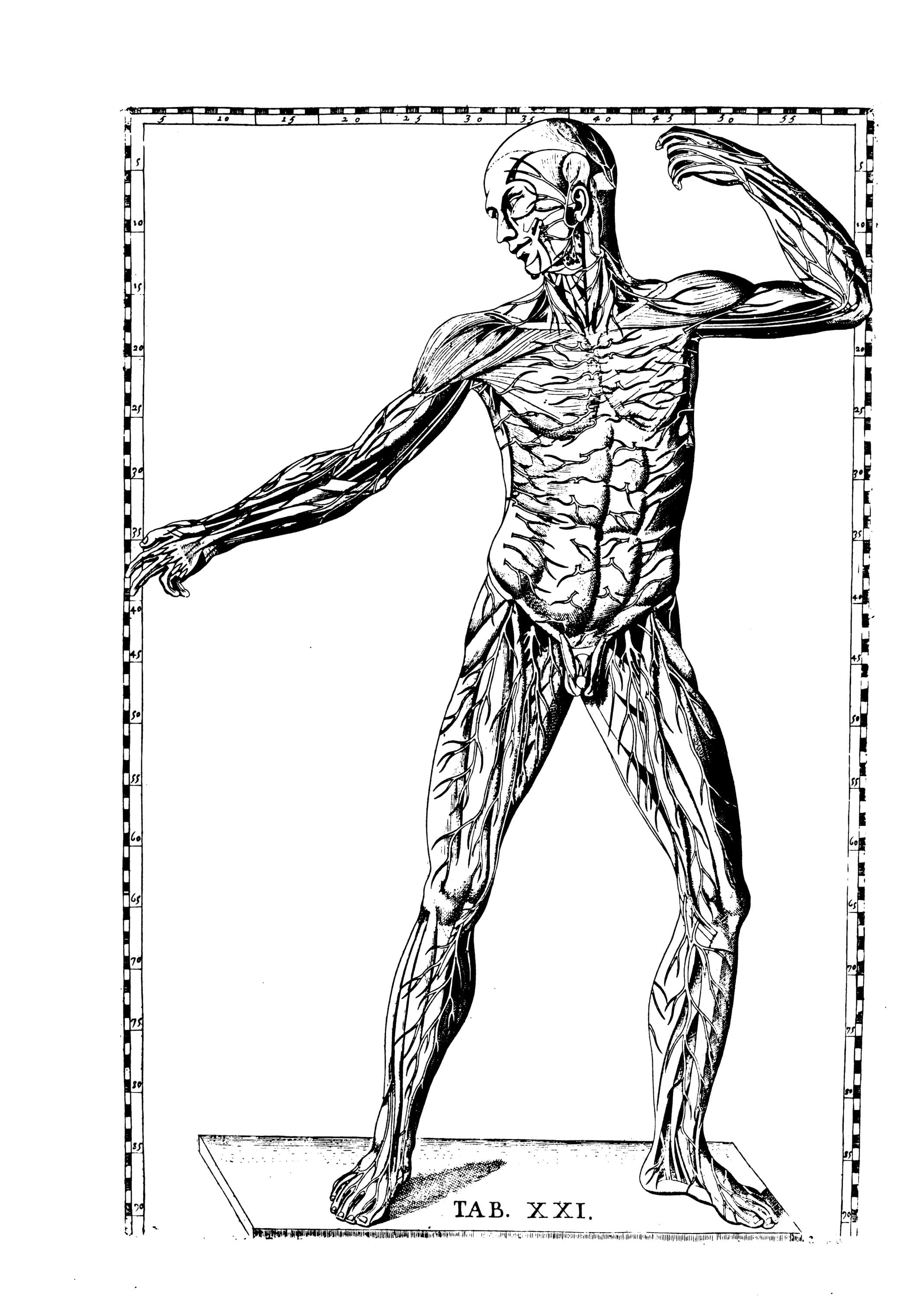
Bartolomeo Eustachi · engraved 1552, published 1714
The Eustachian Plates
Anatomy two centuries ahead of its time.
Tabulae Anatomicae · 1714Curated
Some plates were made as a series, and hang as one.
Three sets — the founding Fabrica, the poetic skeletons, and the pair of colour mezzotints that only make full sense together — priced below the sum of their parts.
A gift for a physician
The plate, and a line engraved beneath it.
A graduation, the match, the end of residency, board certification, a milestone or a retirement — the moments that deserve an object rather than a card. Any physical edition can carry an engraved dedication: a name, a degree, a date, a motto, engraved in a restrained cartouche.
On your wall
These are not offered as posters. They are printed to become the piece a room is built around.
Bernhard Siegfried Albinus, engr. Jan Wandelaar’s plate of 1747, hung in four very different rooms.